
What is a Mini SAS to SAS Cable?
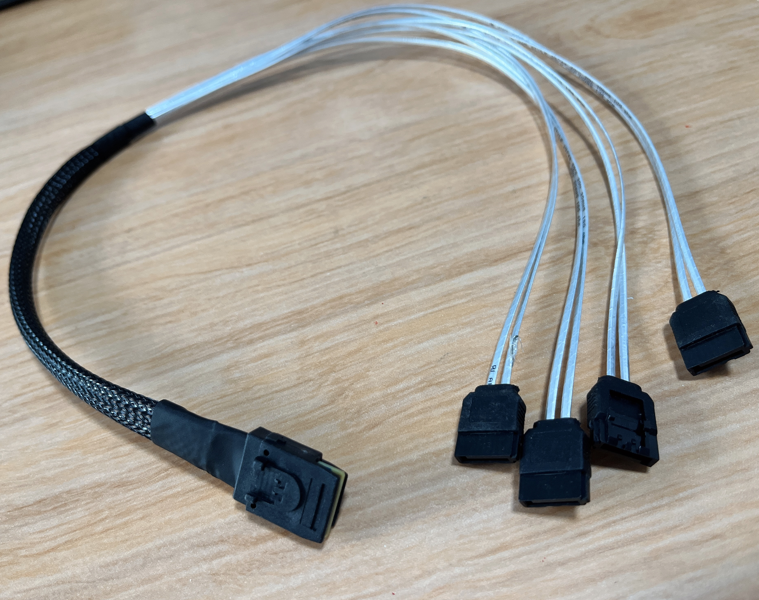
What is a Mini SAS to SAS Cable?
A Mini SAS to SAS cable is a high‑performance connectivity solution designed to link servers, RAID controllers, and storage systems with speed and reliability. By supporting multi‑lane data transfer, these cables ensure consistent high‑speed performance, making them essential for enterprise environments where downtime is not an option. IT professionals worldwide trust Mini SAS to SAS cables because they combine compact design with robust compatibility, delivering seamless integration across a wide range of devices. Whether you are expanding a data center, building a cloud infrastructure, or upgrading enterprise storage, Mini SAS to SAS cables provide the dependable connection you need to keep critical systems running smoothly.
Mini SAS to SAS Cables: Definition and Function
A Mini SAS to SAS cable is a high‑speed data cable designed to connect hosts such as servers or RAID controllers to storage devices like hard disk drives. Built on the Serial Attached SCSI (SAS) protocol, it supports multi‑lane data transmission (typically 4 lanes), ensuring fast and stable performance in enterprise environments.
Key features include:
- High Bandwidth: Supports transfer rates up to 6 Gbps (SAS 2.1) or 12 Gbps (SAS 3.0).
- Compatibility: Connects both SAS and SATA drives, enabling hybrid storage configurations.
- Integrated Power: Certain models include a built‑in SATA power line, simplifying cabling and eliminating extra power requirements.

Common Interface Types and Specifications:
Mini SAS to SAS cables are available in multiple interface combinations, each suited to specific applications:
| Interface Type | Features | Typical Application |
|---|---|---|
| SFF‑8087 to SFF‑8482 | Host side: 36‑pin Mini SAS (SFF‑8087); Device side: 4 SAS targets (SFF‑8482). Often integrates power lines. | Connects server motherboards to multiple SAS/SATA drives |
| SFF‑8087 to SFF‑8087 | Internal direct‑attach cable with Mini SAS connectors on both ends. | Linking host adapters to backplanes for expansion or redundancy |
| SFF‑8643 to SFF‑8087 | High‑performance cable supporting SAS 3.0 (12 Gbps). Compatible with high‑density ports. | Upgrading to 12 Gbps storage networks |
| SFF‑8643 to SFF‑8639 (U.2) | Adapter cable for connecting U.2 NVMe SSDs. | High‑speed solid‑state storage systems |
Key Interface Notes:
- SFF‑8087: Traditional 36‑pin Mini SAS connector, widely used in 6 Gbps SAS systems.
- SFF‑8643: High‑density Mini SAS HD connector, SAS 3.0 compliant, supports 12 Gbps with smaller PCB footprint.
- SFF‑8482: SAS device‑side connector, compatible with SATA drives.
Performance and Technical Requirements
- Transfer Speed: Supports 6 Gbps (SAS 2.1) and 12 Gbps (SAS 3.0), depending on connector type. With 4‑lane parallel transmission, aggregate bandwidth is significantly increased.
- Wire Gauge & Length: Typically 28–30 AWG. Lower AWG (e.g., 28 AWG) means thicker conductors, lower resistance, and reduced signal loss, though less flexible. Standard lengths range from 0.5m to 2m; shorter cables minimize signal attenuation, ideal for internal rack wiring.
- Reliability Features: Some cables support sideband signals and EEPROM recognition, allowing automatic host optimization. Premium cables use tinned copper conductors and shielding layers to enhance EMI resistance.
Main Application Scenarios
- Servers & Data Centers: Connecting drive backplanes, supporting multi‑drive RAID expansion.
- Storage System Upgrades: Transitioning from 6 Gbps to 12 Gbps networks (e.g., SFF‑8643 to SFF‑8087).
- FPGA Prototyping: Enabling high‑speed communication between hosts and FPGA systems for hardware/software co‑verification.
- High Availability Architectures: Used in redundant setups (e.g., multiple adapters to disk enclosures) with specialized AA, X, or YO cables to ensure system uptime.
Buying Considerations:
- Interface Matching: Verify host and device connector types (e.g., SFF‑8087 or SFF‑8643).
- Speed Requirements: For 12 Gbps performance, choose SAS 3.0 compliant cables (SFF‑8643).
- Length & Gauge: Shorter, thicker cables (28 AWG) provide better signal integrity but less flexibility.
- Power Needs: For SATA drives, select models with integrated power lines to simplify cabling.
- Quality Certification: Choose cables that meet industry standards (e.g., RoHS) and include warranty support.
Conclusion:
Mini SAS to SAS cables are critical components in modern storage infrastructures. Selecting the right cable—based on interface type, speed requirements, length, and reliability features—can significantly improve system performance and scalability. For enterprises expanding data centers or upgrading storage networks, investing in high‑quality Mini SAS to SAS cables ensures long‑term stability and efficiency.


Leave a Reply
Want to join the discussion?Feel free to contribute!